Open box: why transparent design output matters to checkers and regulators
Automated design only saves time if its output can be checked. Here is what an auditable design run looks like, and why it matters most on safety-critical work.
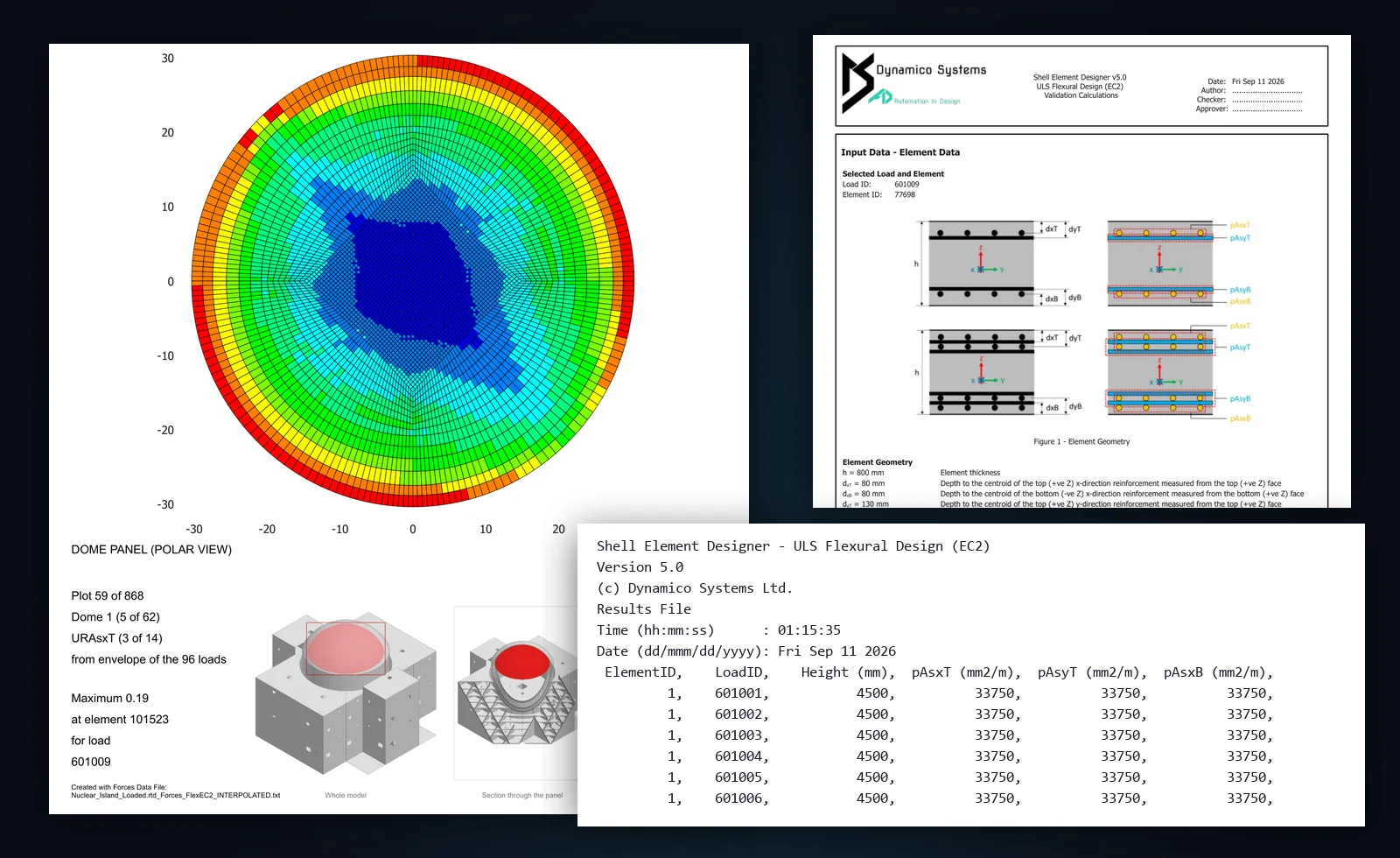
Every design office has met the black box: software that takes a model in and gives numbers out, with the working hidden inside. It is fast until someone has to check it. Then the time saved is spent again, rebuilding calculations by hand to prove that a number on a drawing is right.
The checker’s problem
An independent checker, or a category 3 check on a critical structure, has to answer one question: does the design follow from the analysis and the code? With a black box, the only route to an answer is to redo the work. On a structure with tens of thousands of elements and hundreds of load cases, that is not a check; it is a second design.
On safety-critical and nuclear work the stakes are higher still. Regulators expect an audit trail they can follow from the analysis to the reinforcement, and they expect it to be the same every time.
What an open box looks like
We built Shell Element Designer around the opposite idea: automate the design, and show everything.
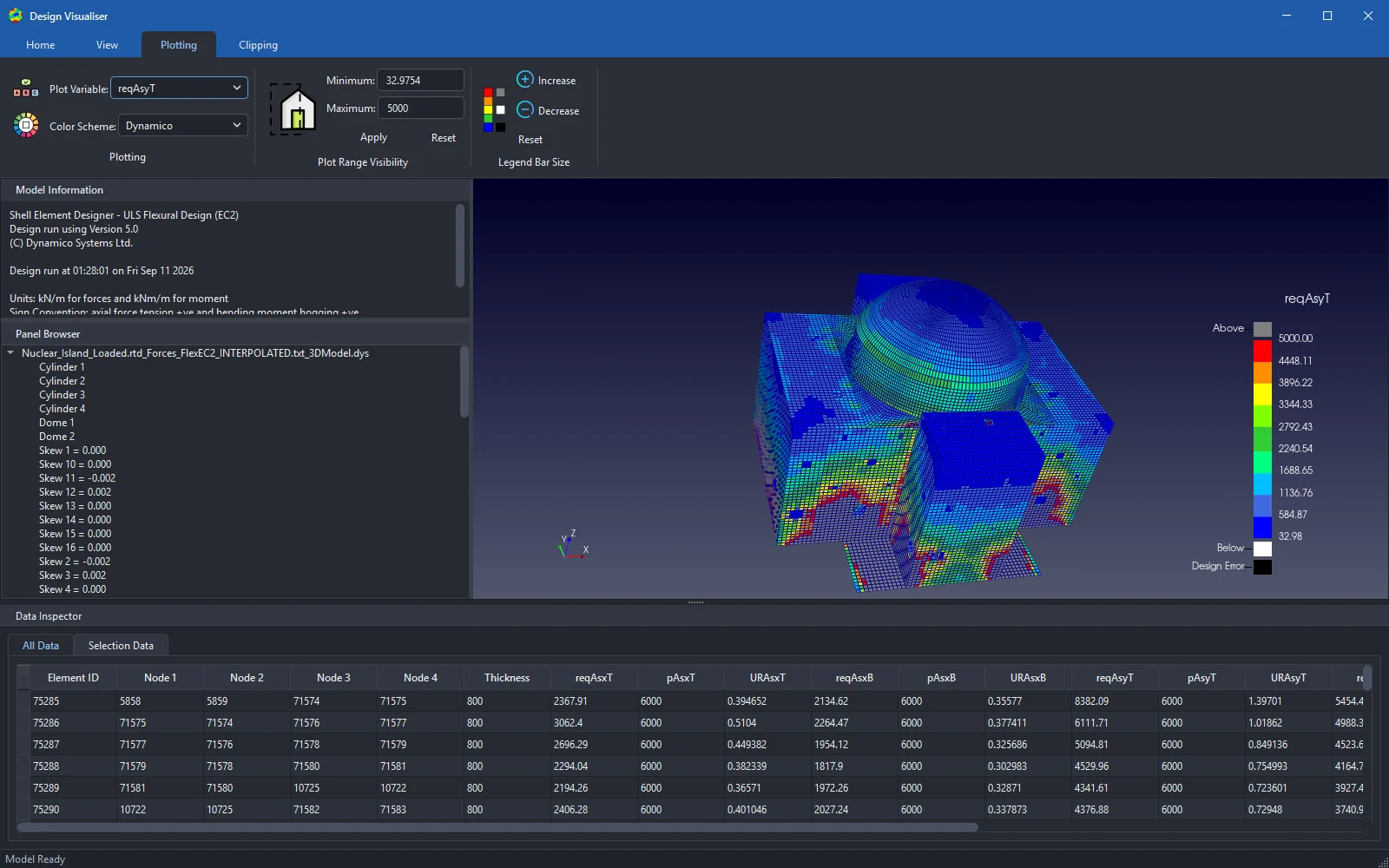
- Human-readable in and out. Inputs are plain text files you can review and version-control; outputs include the complete results for every element and load case.
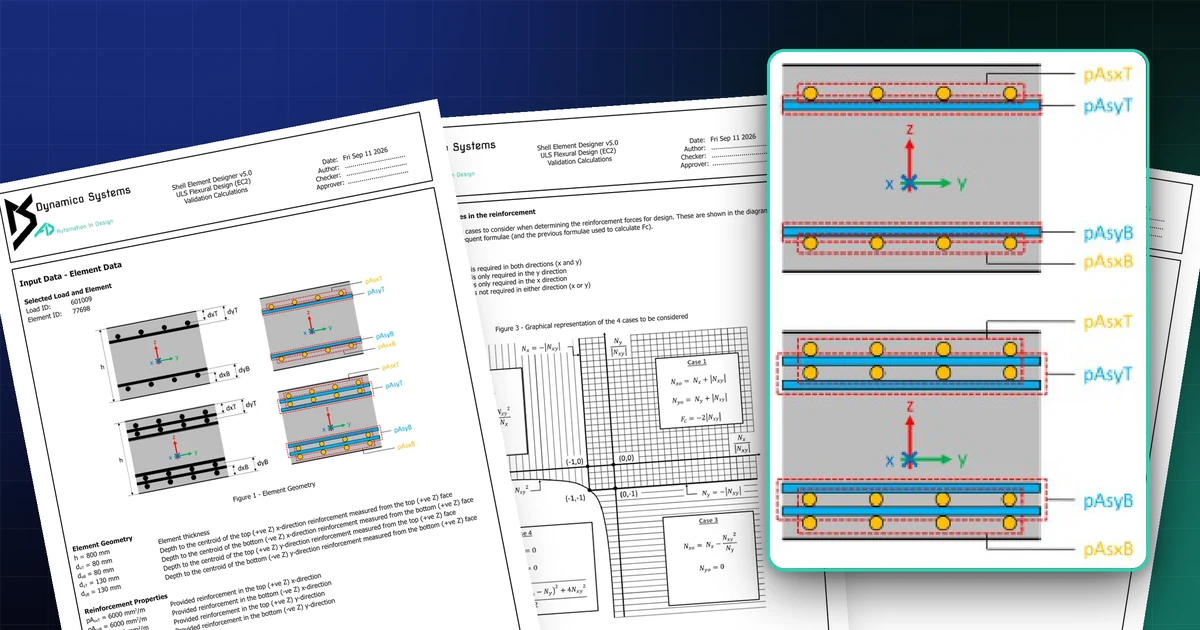
- A hand calculation on demand. For any element and load case, the software writes a step-by-step validation calculation, typically 12 pages, laying out every intermediate value and the code clauses behind it.
- Everything agrees. The maximum on a plot, the row in the results file and the final line of the validation calculation are the same number, because they come from the same engine.
- Repeatable. Identical inputs give identical results, and every results summary is tied to the fingerprint of the file it came from.
Evidence that ships with the software
Transparency in the output is backed by verification of the engine: a manual of hand calculations checked against the software, more than 300 automated tests, and 18 regression checks run on every release.
Proven where it matters
A Class 1 new-nuclear design produced with the software passed independent technical assessment and secured ONR approval. That is what an audit trail is for: a checker, and a regulator, could follow it.
If your checking process spends more time reconstructing calculations than reviewing them, see an open-box design run on your own model.